
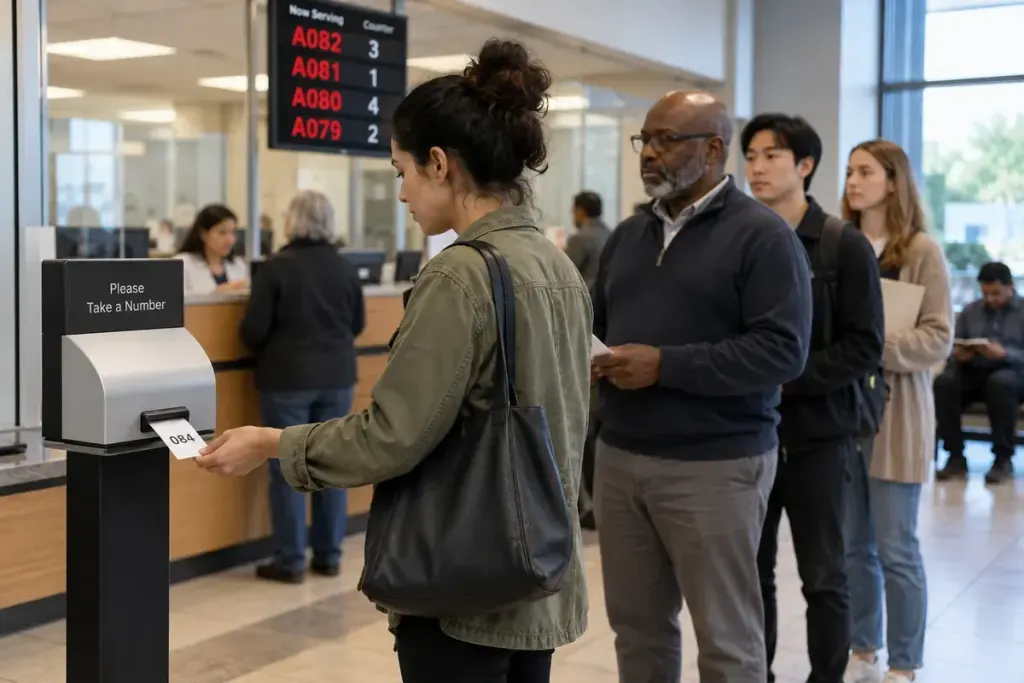
“First come, first served” sounds simple until two people arrive through different doors. One submits an online form, another calls, and a third waits at a counter. A queue becomes fairer when its rules explain which event counts as joining it.
Choose a start point people can understand
Imagine a fictional community workshop with ten places. Does a person join the queue when they open the booking page, begin entering details or complete the form? Each choice has consequences. Counting completed forms may favour people who type quickly; reserving a place indefinitely while a form remains open may prevent others from booking.
The answer need not be identical for every service. What matters is stating the rule, making it workable and checking who it disadvantages. A queue used for an optional activity is also different from a service where urgent needs justify priority.
Define exceptions before the argument
If accessible booking support or priority categories are available, explain how they interact with the main queue. Staff should not have to decide privately which person seems most deserving. Publish enough detail to make the process understandable without exposing personal information.
Consider a lost connection. Does the person keep a place for a limited period, rejoin from the beginning or contact support? A clear recovery route can prevent a technical failure from becoming an invisible penalty.
Test the rule with small stories
- Two requests arrive at the same recorded time.
- A person needs help completing the form.
- Someone cancels after receiving an offer.
- A staff member enters a telephone request late.
Walk through these cases before opening the service. Record unresolved decisions and assign someone to review them. A timestamp alone cannot settle every question of fairness.
People may still dislike waiting, but they should be able to understand why they are waiting and how the next place will be offered. That is a practical standard a queue can be designed to meet.